


Why Field Research Matters in Off-Grid Solar Product Design
By info
Why Field Research Matters in Off-Grid Solar Product Design
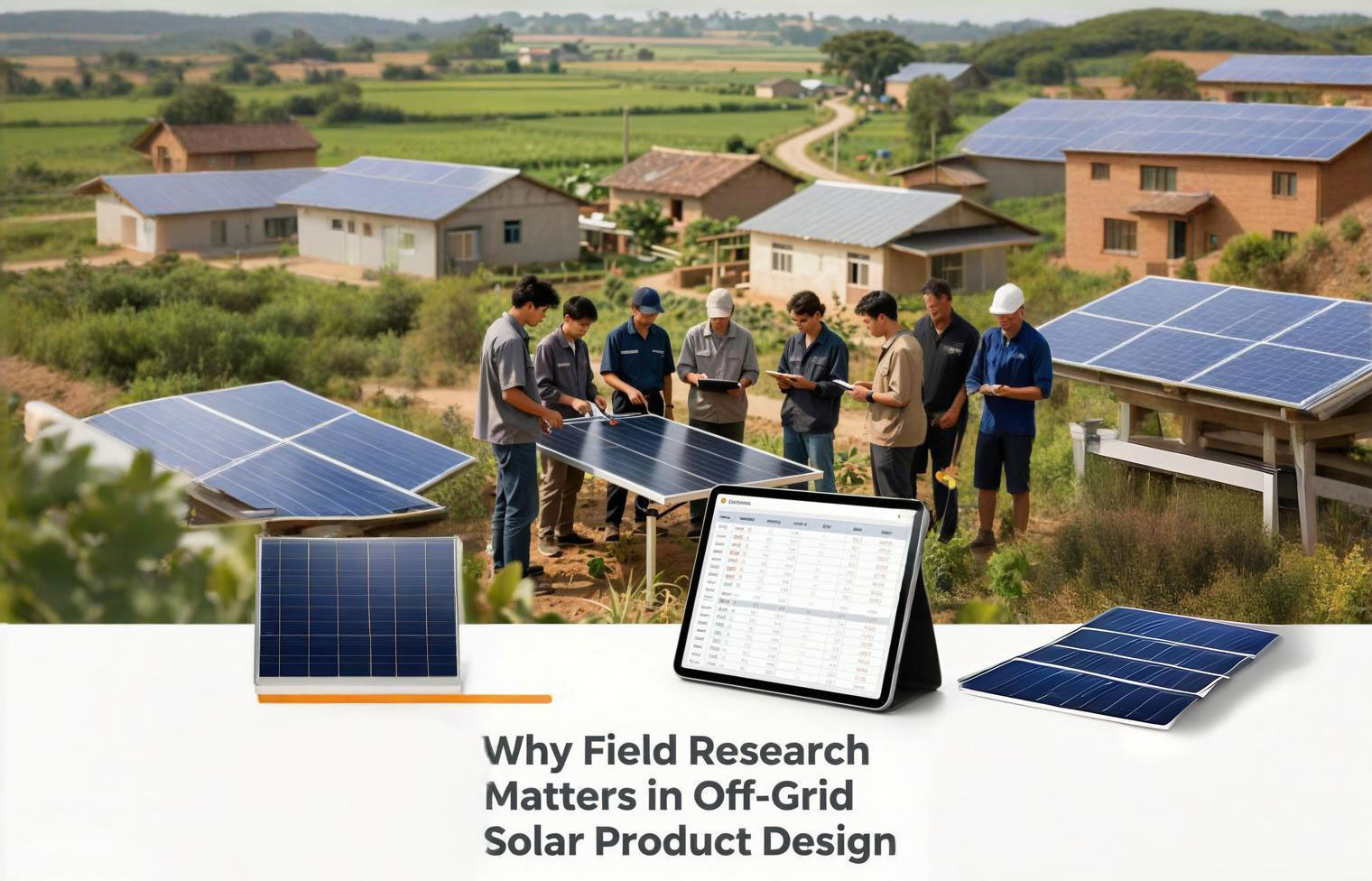
Field research plays a critical role in designing effective and reliable solar products for off-grid communities. By observing how products are used in real-life environments, manufacturers can better understand user behavior, identify unmet needs, and improve product design accordingly.
In the off-grid solar sector, where users often rely on products as their primary source of lighting and energy, bridging the gap between design assumptions and real-world usage is essential.
What Field Research Means in Off-Grid Solar
Field research refers to directly engaging with end users in their daily environments—visiting homes, observing product usage, and collecting feedback based on real experiences.
Unlike lab testing or theoretical design, field research provides insights into how products perform under real conditions, including environmental challenges, usage habits, and local lifestyle patterns.
Why Field Research Is Especially Important in Africa
In many African markets, off-grid solar products are used in conditions that differ significantly from controlled environments:
- Harsh environments: heat, dust, and humidity can affect product lifespan
- Unpredictable usage patterns: charging habits and usage intensity vary widely
- Multi-purpose needs: a single product often serves lighting, charging, and household needs
Because of these factors, product design based solely on assumptions may fail to meet real user expectations.
What We Learned from Field Research Across Africa
Over the past 17 years, through regular field visits to countries such as Ethiopia, Nigeria, Uganda, Kenya, and Somaliland, we have gathered valuable insights into how solar products are actually used.
Some key learnings include:
- Flexibility matters more than single-function design
Users need products that can adapt to different scenarios—portable, hangable, and usable in multiple spaces.
- One system must serve multiple needs
Lighting alone is not enough. Users also require charging solutions for mobile phones, radios, and other small devices.
- Affordability defines adoption
Many households spend around $3–$5 per month on kerosene or candles, making cost a critical factor in product design.
From User Insights to Product Innovation
Field research only creates value when insights are translated into real product improvements. Based on what we observed, we applied several design innovations:
Multi-scenario lighting design
Solar lanterns are equipped with straps, allowing them to be placed on a table or hung for flexible use.
Multi-room lighting solutions
Solar home systems include multiple bulbs to support lighting across different rooms.
Universal charging capability
A 6-in-1 charging cable enables compatibility with various devices, addressing diverse charging needs.
Case Example: Designing an Affordable Alternative to Kerosene
One of the most impactful outcomes of our field research was the development of a solar reading lamp designed to replace candles and kerosene lamps.
We observed that many rural households in Africa spend approximately $3–$5 per month on kerosene lighting. Based on this, we designed a product that could match this cost level while delivering significantly better performance.
Product Highlights:
- High-quality solar panels and lithium iron phosphate batteries
- Simplified structure using only one screw
- Snap-fit and interlocking design inspired by traditional joinery techniques
Impact:
- Brighter and safer lighting than kerosene lamps
- Zero fire risk compared to open-flame lighting
- No harmful emissions, improving indoor air quality
- Up to 5 years of usage at a one-time cost of around $5
- Reduction of approximately 0.1 tons of carbon emissions per household annually
Simulating Real-World Conditions Beyond the Field
In addition to field visits, we also established an outdoor testing environment at our manufacturing facility. By exposing products to real outdoor conditions, we are able to simulate long-term usage and further validate product durability and performance.
Why This Approach Matters for Solar Product Development
For off-grid solar solutions, understanding user behavior is not optional—it is essential. Field research enables manufacturers to design products that are not only functional, but also practical, durable, and aligned with real user needs.
By continuously integrating user insights into product development, manufacturers can deliver solutions that truly improve everyday life in off-grid communities.


